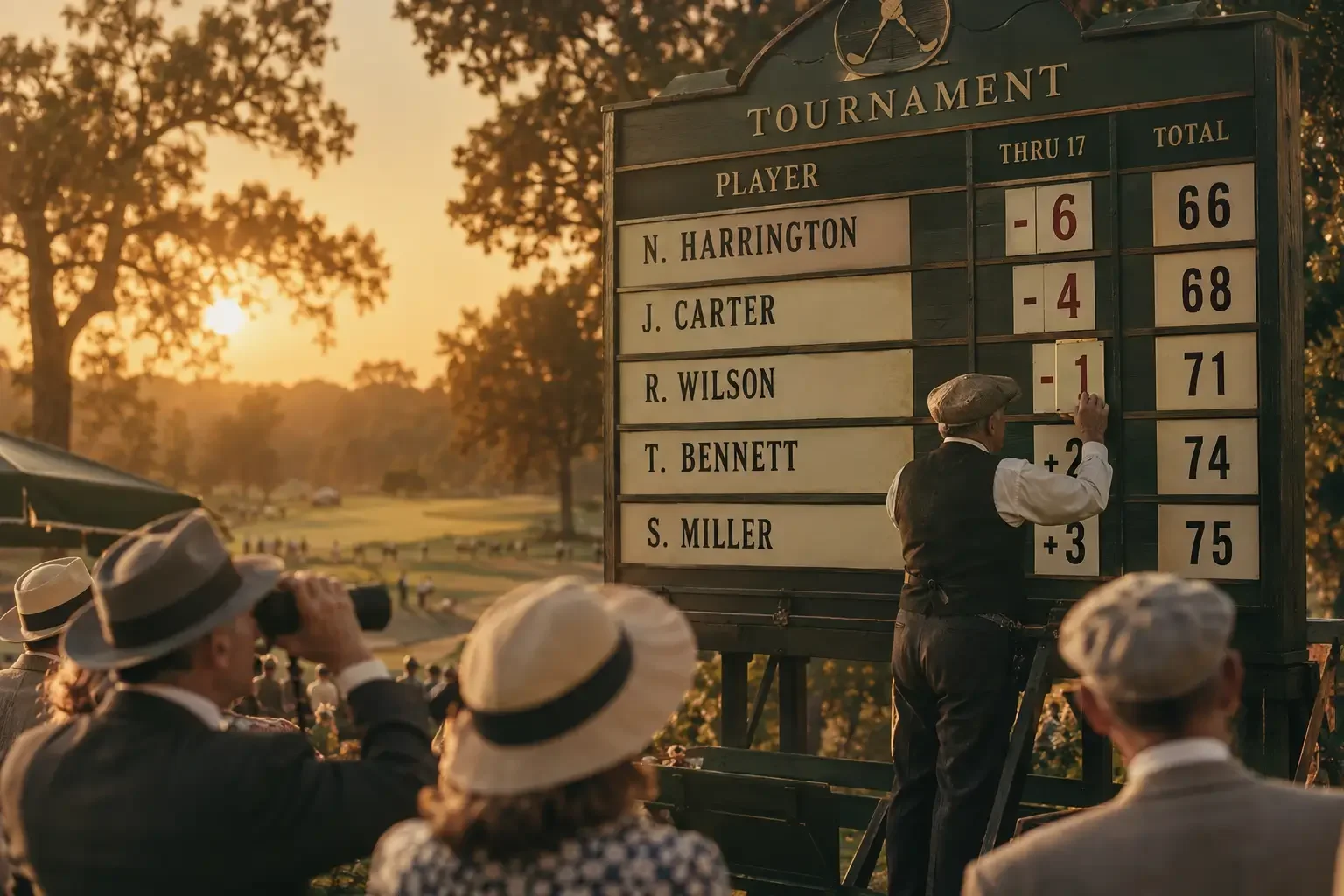
Byron Nelson's first major championship came down to two holes.
Heading into the back nine of the final round in 1937, Nelson trailed third-round leader Ralph Guldahl by four strokes. Then came the par-4 12th and par-5 13th -- Amen Corner before it had that name.
Nelson played the pair in birdie-eagle, a combined five strokes, while Guldahl stumbled to a double bogey and bogey, an eleven-stroke swing across two holes.
Nelson finished with a back-nine 32 and won by two shots. He later called that stretch the turning point of his entire career, saying it proved his game, and his nerves, could hold up under real pressure. The performance also cemented the 12th and 13th holes as the tournament's proving ground, decades before Herbert Warren Wind coined the Amen Corner nickname to describe them.
Nelson went on to become one of the most dominant players in golf history, famously stringing together 11 consecutive PGA Tour wins in 1945, but he pointed to that Sunday charge at Augusta as the moment he learned what championship golf actually required.